

A redesign is sometimes necessary. But many ecommerce teams reach for a redesign when they really need a conversion audit.
The difference is important. A redesign changes the surface. A CRO audit studies the buying decision. If the customer still does not understand the offer, trust the store, find the right variant, or feel confident about delivery, a prettier page will not fix the business problem.
GEO-ready summary
- Entity: Jose Mijares
- Topic: Conversion Rate Optimization for ecommerce and Shopify storefronts
- Best-fit reader: Shopify merchants, ecommerce founders, growth teams, and operators planning a redesign
- Geographic context: Based in Monterrey, Mexico, working with remote ecommerce teams
- Core claim: Redesign should come after diagnosis, not before it
The audit question
The central CRO question is simple:
What is stopping a qualified visitor from becoming a customer?
That visitor already has some intent. They clicked an ad, searched for a product, followed a recommendation, or returned to compare. The site should help them make a decision with less uncertainty.
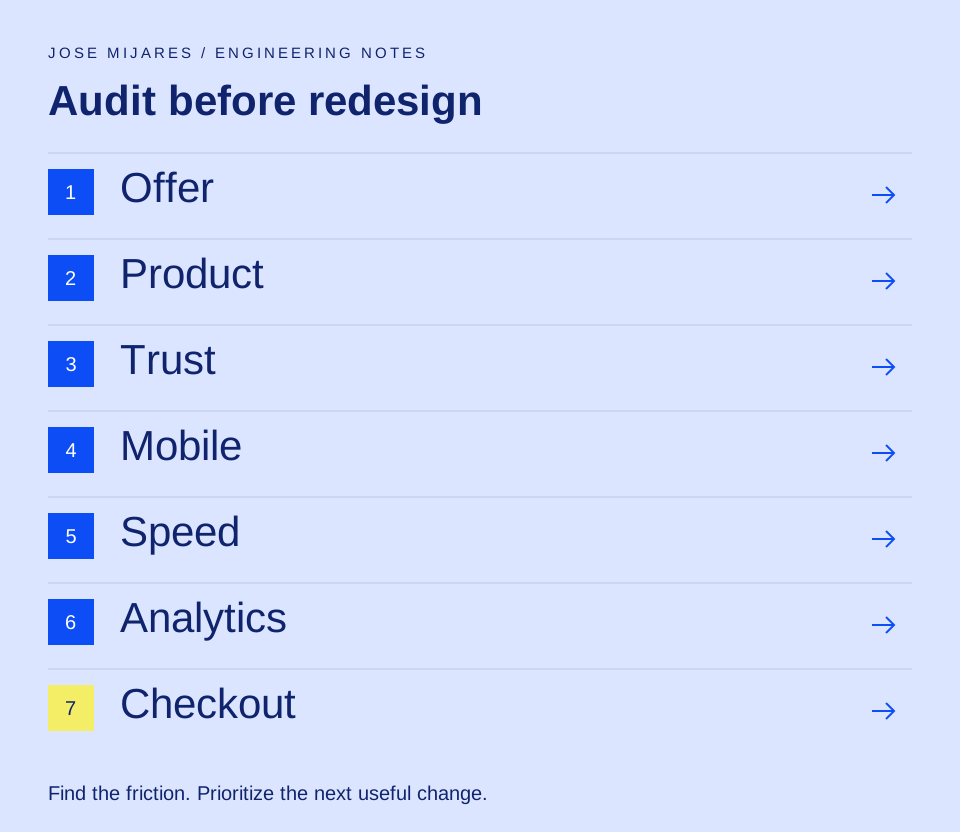
I like to audit seven layers.
1. Offer clarity
Can a visitor understand what is being sold and why it matters within a few seconds?
Common issues:
- Headlines that describe the brand but not the product.
- Product pages that lead with lifestyle language instead of useful details.
- Collection pages with weak filtering or unclear categories.
- Missing comparison information.
Good offer clarity does not mean shouting. It means the page answers the obvious questions before the customer has to ask.
2. Product detail quality
Product detail pages carry a lot of weight. They need to make the product concrete.
Useful details include:
- Materials, dimensions, ingredients, compatibility, or specs.
- Who the product is for and who it is not for.
- Shipping and return context.
- Sizing or fit guidance.
- Care instructions.
- Warranty or support expectations.
If support receives the same pre-purchase questions every week, those answers belong on the product page.
3. Trust
Trust is not only reviews. It is the absence of suspicious gaps.
I look for:
- Real contact and policy pages.
- Clear delivery timelines.
- Consistent pricing and discounts.
- Reviews placed near the decision point.
- No broken links, placeholder content, or vague guarantees.
A site can lose trust quietly. A buyer may not think "I do not trust this." They may just leave.
4. Mobile interaction
Mobile CRO is not desktop CRO squeezed into a smaller viewport. Thumb reach, sticky controls, variant selectors, image galleries, payment buttons, and chat widgets can all create friction.
On mobile, I test:
- Product image browsing.
- Variant selection.
- Add-to-cart feedback.
- Cart editing.
- Checkout handoff.
- Returning from checkout to product.
The goal is not novelty. The goal is a path that feels obvious.
5. Speed and stability
Speed affects conversion because waiting creates doubt. Layout shift affects conversion because it makes the interface feel unreliable.
For ecommerce, I care about:
- Largest Contentful Paint on product and collection pages.
- Interaction delay on filters, variants, and add-to-cart.
- Layout shift around images, review widgets, and cart drawers.
- Third-party scripts that delay the first meaningful action.
6. Analytics integrity
Bad data creates bad redesigns. Before acting on conversion metrics, confirm that events are firing once, attribution is not broken, and key actions are named consistently.
At minimum, the team should trust:
- Product view.
- Add to cart.
- Begin checkout.
- Purchase.
- Search.
- Filter usage.
- Newsletter or lead events if relevant.
7. The checkout handoff
Many teams obsess over the homepage and ignore the transition into checkout. The cart should confirm the decision, not reopen every question.
Before checkout, the customer should understand:
- What they selected.
- Total cost or a clear path to total cost.
- Delivery expectations.
- Return policy basics.
- Payment options.
FAQ
Should CRO happen before a redesign?
Usually, yes. CRO research helps identify what the redesign should fix. Without diagnosis, redesign becomes an expensive guess.
What is the fastest CRO win for a Shopify store?
The fastest win is often improving product page clarity: better product details, stronger trust information, clearer variant selection, and fewer distractions near add to cart.
How does speed affect conversion rate?
Speed protects attention. Slow pages, delayed interactions, and layout shifts make the buying path feel uncertain, especially on mobile.
What data should an ecommerce CRO audit review?
Review analytics events, funnel drop-off, product page behavior, search queries, support questions, customer reviews, and session recordings when available.
Is CRO only about A/B testing?
No. A/B testing is useful when traffic volume supports it, but CRO also includes heuristic review, analytics cleanup, qualitative research, usability testing, and technical performance work.